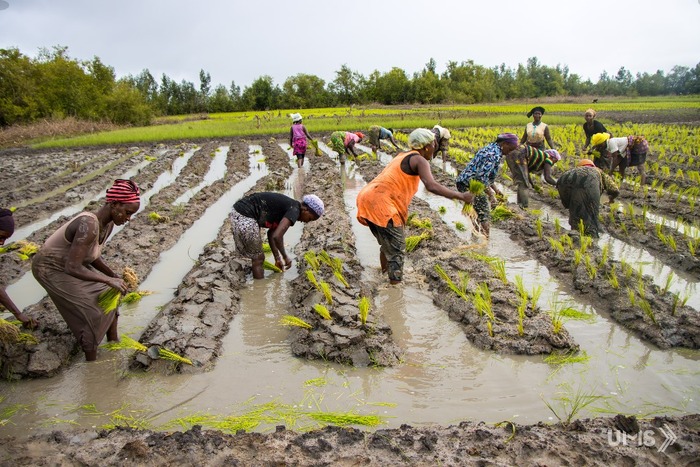
The UMS Group officially launches its “Mangrove Rice” project in Katougouma to strengthen the rice sector and support the autonomy of local communities.
Conakry, August 8, 2024. During an official ceremony in the presence of Mr. Mamadou Camara, governor of the administrative region of Boké, the prefect Mr. Sény Silver Camara, as well as many other personalities, the UMS Group, under the leadership of its general manager Mr. Mohamed Bennani, inaugurated yesterday its agricultural project “Mangrove Rice” in Katougouma. This project, initiated as part of the CSR policy of the UMS Group, aims to support the local rice sector and improve the living conditions of local communities, in collaboration with producers and the authorities of the region.
This project is the result of a collaborative approach undertaken by the UMS Group, which, alongside local authorities, conducted extensive consultations with local farming communities to understand their needs. Following this consultative approach, seven sectors and 37 producers were selected to participate in the project.
Thus, the UMS Group is actively collaborating with local producers and elected officials in the region to develop this promising project. The first steps involved the purchase and distribution of equipment for irrigating the dikes needed for efficient water management in rice fields. The distribution of seeds to producers was followed by the development and establishment of nurseries.
The first harvest is expected between October and November 2024, with very encouraging economic prospects. The project promises a return on investment of over 150%. By supporting local producers, the UMS Group plays a key role in creating jobs and improving the living conditions of Katougouma residents.
Mangrove rice, highly prized by Guineans for its taste and environmentally friendly cultivation method, represents a unique opportunity to strengthen local production and reduce the country’s dependence on imports, which still account for 30% of the rice consumed in Guinea. The UMS Group project aims to increase local production of this rice, thereby contributing to the country’s food security.
Beyond financial support, the UMS Group also provides technical support through the implementation of a continuing education program for producers. Led by Gadirou Diallo, an expert consultant with the UMS Group specializing in rural community development, these training sessions are designed to raise producers’ awareness of more modern and sustainable agricultural techniques that guarantee increased yields while preserving the environment.
The launching ceremony took place in Katougouma Centre in the presence of local representatives and local authorities. Mr. Mamadou Camara, Governor of the Boké administrative region, was very active in the implementation of this project, which he considers essential for the independence of local communities. He stated: “This agricultural project, carried out in collaboration with the UMS Group, is above all a project of excellence whose ambition is to support farmers by training them so that they can earn a decent living from their work. This project is part of the regional development strategy, which aims to make agriculture the beacon of all projects.”
After the ceremony, guests visited a 6-hectare plot near the port of Katougouma, where a cordon cutting took place. They then visited the Kakissa community nursery, which covers over 600m2, to attend a presentation and a transplanting demonstration.
Mohamed Bennani, CEO of UMS, said: “It is with great pride that we officially launched the “Mangrove Rice” agricultural project here in Katougouma. This project embodies our strong commitment to the economic and social development of this region. Our vision is to transform Katougouma into a prosperous and sustainable agricultural area.”
For Fadi Wazni, Chairman of the UMS Board of Directors: “By working towards sustainable development and local food self-sufficiency, we are investing in the future of our communities. This project also contributes to food security, job creation, and economic development in the area. Agriculture, in conjunction with local cultures and traditions, plays a crucial role in preserving cultural heritage.”